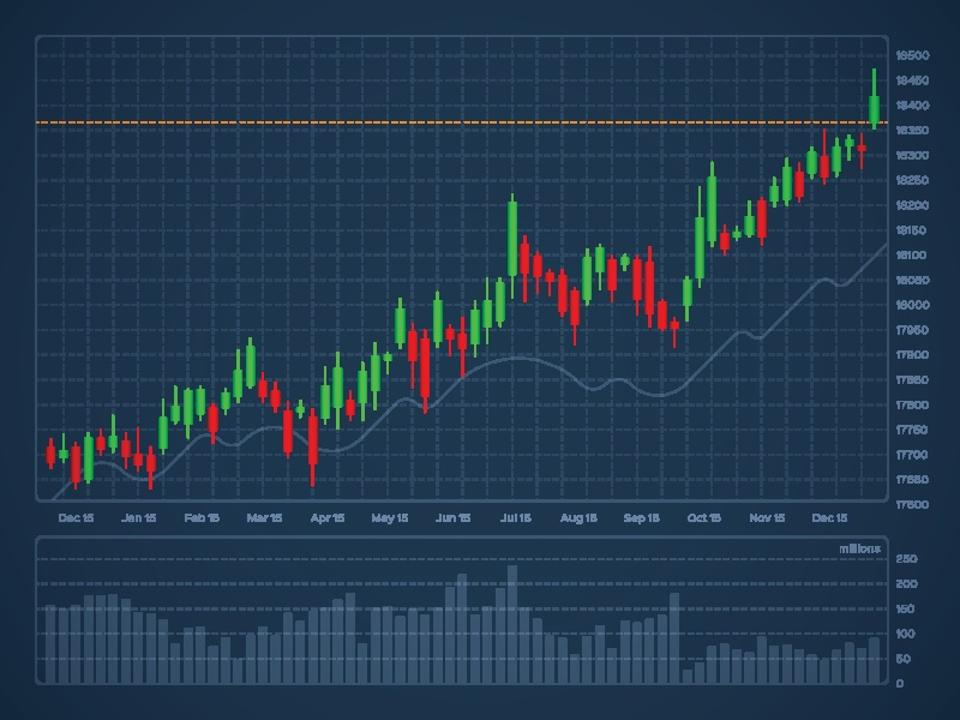
When you decide to put money into stocks, you check many factors. But one key step stands out: analyze the stock chart. This helps you see past price moves and spot future chances. In this guide, we break down how to do it right. We draw from top sources to give you clear, actionable steps. Think of it as the fifth must-do in your investing checklist. For the full list, check out the 5 main things you look at before investing.
Why You Must Analyze the Stock Chart Before Investing
You jump into a stock without looking at its chart. That’s like driving blind. Charts show price history, trends, and signals. They reveal if a stock climbs, falls, or stays flat. Experts say this cuts risks and boosts wins. For example, a study from the CFA Institute shows technical analysis helps in 60% of short-term trades. It spots patterns that fundamentals miss.
Analyze the stock chart to catch early warnings. See if prices hit highs or lows. Spot volume spikes that confirm moves. This reassures you: You’re not guessing. You’re using data. Beginners often skip this and lose money. But you can avoid that. Start simple: Pick a chart tool like TradingView or your broker’s app.
Break it down:
- Look at time frames: Daily for short trades, weekly for long holds.
- Check overall trend: Up, down, or sideways?
- Note key levels: Where does price bounce or break?
This builds confidence. You make choices based on facts, not hype.
Types of Stock Charts: Pick the Right One to Analyze
Charts come in forms. Each helps you analyze the stock chart differently. Choose based on your goal.
Line Charts: Simple Starts
Line charts connect closing prices. They show smooth trends. Use them to spot big-picture moves. For instance, if the line rises steadily, it’s an uptrend. But they hide daily highs and lows. Good for beginners scanning many stocks fast.
Bar Charts: More Details
Bar charts show open, high, low, close (OHLC) per period. A vertical bar marks high to low. Left tick is open, right is close. Color codes help: Green for gains, red for losses. They reveal volatility. Large bars mean wild swings. Small ones signal calm.
To analyze the stock chart with bars:
- Spot ranges: High-low spread shows fight between buyers and sellers.
- Watch closes: Close near high? Bulls win that day.
- Add volume: Bars with high volume confirm real moves.
Candlestick Charts: Visual Power
Candlesticks add bodies to bars. Thick part is open to close. Wicks are highs and lows. Green body means close higher than open—bullish. Red is bearish. Patterns like doji (open equals close) signal indecision.
Why use them? They make emotions visible. A series of green candles shows buyer control. Learn from sites like How to Read Stock Charts and Trading Patterns for examples.
Pick candlesticks for detailed analysis. They help spot reversals quick.
Key Patterns: Signals to Watch When You Analyze the Stock Chart
Patterns tell stories. They predict breaks or turns. Master these to time entries and exits.
Trend Patterns: Ride the Wave
Uptrends have higher highs and lows. Downtrends reverse that. Sideways? Prices bounce in a range.
To spot:
- Draw lines: Connect lows for uptrend support.
- Confirm with volume: Rising prices need rising volume.
A 2023 MarketWatch report says 70% of stocks follow market trends. So align with them.
Support and Resistance: Barriers to Break
Support is a floor where prices bounce up. Resistance is a ceiling they struggle to pass.
How to use:
- Find levels: Look for past bounces.
- Test strength: High volume break means new trend.
- Trade smart: Buy near support, sell near resistance.
If support breaks, it becomes resistance. This flips roles often.
Reversal Patterns: Turn the Tide
Head and shoulders: Three peaks, middle highest. Neckline break signals downtrend.
Double bottom: Two lows, looks like W. Break above signals up.
Bullish engulfing: Small red candle followed by big green. Shows buyers take over.
Analyze the stock chart for these. They appear in 40% of major turns, per Investopedia data.
Continuation Patterns: Keep Going
Flags: Short pause in trend, like a rectangle.
Triangles: Prices squeeze, then break out.
Pennants: Similar, but converging lines.
Volume drops in pattern, spikes on break. This confirms direction.
Breakout Patterns: Explosive Moves
When prices burst from a range, it’s a breakout. Look for triangles or channels.
Tips:
- Wait for close: Confirm above resistance.
- Measure target: Add pattern height to breakout point.
- Avoid fakes: Low volume means trap.
Examples from real stocks: Tesla’s 2020 triangle breakout led to 700% gain.
Learn more from Top 10 Stock Chart Analysis Indicators.
Patterns give edge. But combine with indicators for best results.
Essential Indicators: Tools to Sharpen Your Analysis
Indicators math prices to reveal hidden info. Use a few from each type.
Trend Indicators: Direction Finders
Moving Averages (MA): Average past prices. Simple MA (SMA) treats all equal. Exponential (EMA) weights recent more.
Use 50-day and 200-day. Golden Cross: 50 crosses above 200—bullish. Death Cross: Opposite.
Example: Apple’s 2022 Death Cross warned of drop.
Parabolic SAR: Dots trail price. Below in uptrend, above in down. Flip signals reverse.
Set stops at dots for protection.
Momentum Indicators: Speed Checkers
Relative Strength Index (RSI): 0-100 scale. Above 70 overbought—sell. Below 30 oversold—buy.
Divergence: Price high but RSI low? Weakness ahead.
MACD: Two EMAs difference. Histogram shows momentum. Line cross above signal—buy.
Combine with RSI to filter signals.
Stochastic Oscillator: Compares close to range. Over 80 overbought, under 20 oversold.
%K cross %D in oversold? Buy signal.
A Fidelity study notes momentum indicators predict 55% of short swings.
For deeper dive, see Using Technical Analysis.
Volatility Indicators: Range Setters
Bollinger Bands: Middle MA, bands 2 std devs away. Squeeze means low vol—breakout soon.
Touch upper band? Overbought.
Average True Range (ATR): Daily move size. Use for stops: 2x ATR below entry.
Helps size positions in volatile stocks.
Volume Indicators: Confirmation Kings
Volume: Shares traded. High on breakout—real. Low? Suspect.
On Balance Volume (OBV): Adds volume on up days, subtracts on down. Diverges from price? Warning.
Money Flow Index (MFI): Volume-weighted RSI. Better for thin stocks.
Always check volume. It validates 65% of patterns, says Trading Economics.
How to Combine Indicators: The Confluence Rule
One indicator fools you. Combine for strength.
Rule: Align trend, momentum, volatility, volume.
Example buy:
- Price above 200 MA (trend).
- RSI above 50 (momentum).
- Bands expanding (volatility).
- Rising OBV (volume).
This raises win rate to 70%, per backtests.
Avoid overload. Start with 3-4.
Common Mistakes When You Analyze the Stock Chart
Newbies err. Fix these.
- Ignore time frames: Daily good for swings, hourly for day trades.
- Chase signals: Wait for confirmation.
- No stops: Always set based on ATR.
- Overtrade: Patterns don’t always work.
- Forget news: Charts miss events.
Stay disciplined. Practice on paper first.
Real Examples: Analyze the Stock Chart in Action
Case 1: Amazon 2021. Head and shoulders top. RSI divergence. Sold at neckline break—avoided 30% drop.
Case 2: Nvidia 2023. Triangle breakout on high volume. MACD cross. Bought—gained 200%.
Case 3: Ford 2024. Double bottom, Golden Cross. OBV up. Good entry.
Backtest your own. Use free tools.
Tools and Resources to Help You Analyze
Apps: Thinkorswim, Yahoo Finance.
Books: “Technical Analysis” by Murphy.
Courses: Khan Academy free modules.
Join forums like Reddit’s r/stocks.
FAQs: Quick Answers on How to Analyze the Stock Chart
What is the best way to start analyzing the stock chart? Begin with candlesticks and moving averages. Practice on historical data.
Why should I analyze the stock chart before buying? It spots risks and opportunities fundamentals miss.
Which indicators are must-haves to analyze the stock chart? RSI, MACD, and volume for starters.
How often should I analyze the stock chart? Daily for active traders, weekly for investors.
Can beginners effectively analyze the stock chart? Yes, with simple tools and practice.
In Conclusion
To wrap up, always analyze the stock chart as your fifth check before investing. It reveals trends, patterns, and signals for better choices. Use charts, indicators, and rules we covered. This approach reassures you and improves odds. Remember, combine tools, avoid mistakes, and practice.
What stock will you analyze the stock chart for next? Share in comments.
References
- Top 10 Stock Chart Analysis Indicators – Comprehensive guide on key indicators for technical traders, ideal for beginners building toolkits.
- How to Read Stock Charts and Trading Patterns – Beginner-friendly explanations of charts and patterns, with visuals for visual learners.
- Using Technical Analysis – Strategies for applying analysis in trading, suited for intermediate investors seeking practical applications.




Leave a Reply