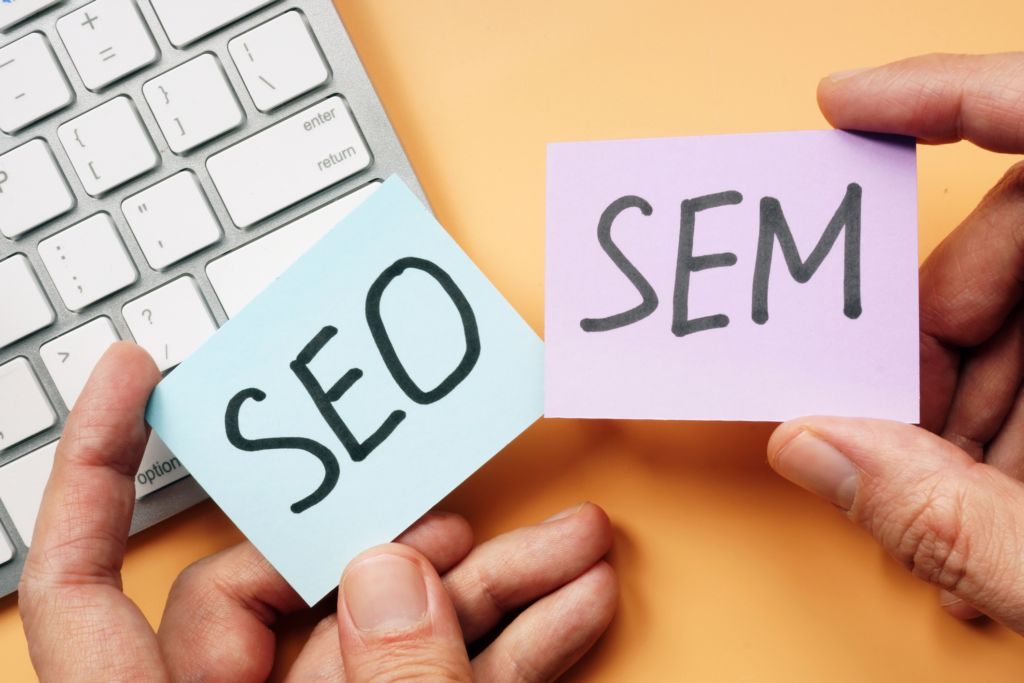
You want to boost your website’s visibility. You aim to attract more visitors who turn into customers. SEO and SEM Proficiency helps you achieve that. These skills let you rank higher on search engines like Google. They combine free and paid methods to grow your online presence. In this guide, we explore what SEO and SEM Proficiency means. We cover basics, steps to build skills, and ways to use them together. Whether you start fresh or seek to improve, this article gives actionable advice.
What Is SEO?
Search Engine Optimization, or SEO, improves your site to rank higher in unpaid search results. It draws organic traffic without paying for ads. SEO focuses on making your content match what people search for.
Experts use SEO to build long-term growth. It involves understanding how search engines work. Google uses algorithms to decide rankings. These change often, so stay updated.
Break down SEO into types. On-page SEO optimizes elements on your site. This includes titles, headings, and content. Off-page SEO builds links from other sites. Technical SEO fixes behind-the-scenes issues like speed and mobile-friendliness.
Why pursue SEO and SEM Proficiency? SEO drives 53% of website traffic on average. It offers high conversion rates, around 14.6% for organic visitors. Unlike ads, organic results build trust. Users click them 94% of the time over paid ones.
Start with keyword research. Find terms people use. Tools like Google Keyword Planner help. Aim for words with good search volume but low competition.
Next, create quality content. Write articles that answer questions. Use short sentences. Keep paragraphs brief. This boosts readability.
Optimize images with alt text. Structure URLs clearly. Add internal links to guide users.
For off-page, earn backlinks. Guest post on blogs. Share on social media. High-quality links signal authority to Google.
Technical aspects matter too. Ensure fast load times. Sites loading in under 3 seconds keep visitors. Make your site mobile-friendly. Over 92% of users access the web via phones.
Track progress with Google Analytics. Monitor traffic, bounce rates, and conversions. Adjust based on data.
Building SEO skills takes time. Practice on a personal blog. Experiment with changes and see results.
What Is SEM?
Search Engine Marketing, or SEM, uses paid ads to appear in search results. It includes pay-per-click (PPC) campaigns. You bid on keywords to show ads.
SEM gives quick visibility. Unlike SEO, results appear fast. Set up a campaign, and ads run in hours.
Google Ads is a key platform. Create ad groups. Write compelling copy. Target audiences by location, age, or interests.
Bidding works like an auction. Pay when someone clicks. Set budgets to control costs.
SEM complements SEO in SEO and SEM Proficiency. Use it to test keywords. See what drives clicks, then apply to organic efforts.
Pros include targeted reach. Show ads to ready buyers. Track every dollar spent.
Conversion rates for search ads average 4-6%. Google Shopping ads boost this by 30% over text ads.
Drawbacks: Costs add up. Stop paying, and visibility drops.
To succeed, optimize ads. Use A/B testing. Refine bids. Focus on quality scores to lower costs.
Remarketing targets past visitors. Show ads to remind them of your site.
Integrate with analytics. Measure ROI. Adjust campaigns for better performance.
Key Differences Between SEO and SEM
SEO and SEM differ in approach. SEO builds organic rankings over time. SEM buys positions instantly.
Cost: SEO has upfront work but no per-click fees. SEM charges for each click.
Time: SEO takes months to show gains. SEM delivers immediate traffic.
Visibility: Organic results sit below ads but earn more trust. Paid ads top the page.
Targeting: SEM allows precise audience selection. SEO relies on broad optimization.
Longevity: SEO effects last. SEM stops when budget ends.
Pros of SEO: Sustainable, credible, high ROI long-term. A thought leadership campaign can yield 748% ROI.
Cons: Slow results, algorithm changes.
Pros of SEM: Fast, controllable, data-rich.
Cons: Expensive, less trust in ads.
Choose based on goals. Need quick wins? Use SEM. Want lasting growth? Focus on SEO.
Many blend both for full SEO and SEM Proficiency.
How SEO and SEM Work Together
Combine SEO and SEM for stronger results. Use SEM data to inform SEO.
Run ads on potential keywords. See which convert. Then optimize content for those in SEO.
SEM fills gaps while SEO builds. Launch ads for new products. Build organic rankings meanwhile.
Share insights across channels. Ad performance reveals user intent. Apply to site content.
Examples: A bakery uses SEM for “best cupcakes near me” ads. Analyzes clicks. Creates SEO-optimized pages on those terms.
Integration boosts overall visibility. Dominate search pages with ads and organics.
Strategies: Align messaging. Use similar keywords. Track combined metrics.
Benefits: Higher traffic, better conversions. One study shows integrated campaigns increase ROI.
Avoid silos. Team up SEO and SEM experts.
Building Proficiency in SEO
Gain SEO and SEM Proficiency step by step. Start with basics.
Step 1: Learn Fundamentals
Understand search engines. Read guides on algorithms. Know ranking factors like content quality and backlinks.
Step 2: Master Tools
Use Google Search Console for site health. Ahrefs for keyword research. SEMrush for competitor analysis.
Step 3: Practice Keyword Research
Identify terms. Look at volume, difficulty. Target long-tail like “how to optimize images for SEO”.
Step 4: Optimize On-Page Elements
Craft titles under 60 characters. Write meta descriptions. Use headings: H1 for main, H2 for subs.
Step 5: Build Content Strategy
Create valuable posts. Aim for 3,000+ words for more traffic. Include stats, examples.
Step 6: Focus on Technical SEO
Fix crawl errors. Create sitemaps. Ensure HTTPS.
Step 7: Earn Backlinks
Reach out for guest posts. Create shareable infographics.
Step 8: Analyze and Iterate
Use analytics. Track rankings. Adjust tactics.
Tips: Stay updated via blogs. Join communities.
Examples: A site improved rankings by fixing speed, gaining 3x traffic.
Certifications: Google Analytics, Proficiency Diploma in SEO and SEM.
Building Proficiency in SEM
SEM skills build on similar foundations.
Step 1: Understand Platforms
Learn Google Ads. Set up accounts.
Step 2: Keyword Bidding
Research terms. Set bids based on value.
Step 3: Create Ads
Write clear copy. Include calls to action.
Step 4: Target Audiences
Use demographics, remarketing.
Step 5: Manage Budgets
Set daily caps. Monitor spend.
Step 6: Optimize Campaigns
A/B test. Improve quality scores.
Step 7: Track Performance
Measure clicks, conversions.
Tips: Start small. Scale winners.
Examples: A campaign reduced costs by 4-6x with optimization.
Certifications: Google Ads.
Integration Strategies for Maximum Impact
To excel in SEO and SEM Proficiency, integrate deeply.
Strategy 1: Data Sharing
Use SEM insights for SEO content.
Strategy 2: Unified Keywords
Align terms across channels.
Strategy 3: Cross-Promotion
Link ads to optimized pages.
Strategy 4: Retargeting with SEO
Remarket to organic visitors.
Strategy 5: Performance Analysis
Combine metrics for holistic view.
Examples: Businesses see 3x conversions with integrated approaches.
Challenges: Coordinate teams. Use tools for unified dashboards.
Career Paths in SEO and SEM
SEO and SEM Proficiency opens doors.
Roles: SEO Specialist, SEM Manager, Digital Marketer.
Paths: Start as analyst. Move to strategist.
Requirements: Degree in marketing helpful. Skills more key.
Salaries: SEO Specialists earn $60,000+ average.
Steps to Career:
- Build portfolio.
- Get certified.
- Network on LinkedIn.
- Apprentice or intern.
- Learn essential skills for digital marketers.
Tips: Practice on real projects. Attend meetups.
Outlook: Market grows 8.3% CAGR.
Tips for Success
- Update skills regularly.
- Focus on user intent.
- Avoid black-hat tactics.
- Use AI for insights, but human touch matters.
- Measure everything.
Quotes: “SEO is a marathon, not a sprint.” – Expert.
Statistics and Examples
Organic CTR for #1 is 39.8%.
Example: Company doubled traffic with SEO audit.
SEM case: 12.5% CTR led to 35,000 conversions.
Advanced Techniques
Dive into voice search optimization. Use natural language.
Multimodal: Optimize images, videos.
AI impact: Content must answer directly.
E-E-A-T: Show expertise.
Challenges and Solutions
Challenge: Algorithm updates.
Solution: Diversify traffic.
Challenge: High competition.
Solution: Niche targeting.
FAQs on SEO and SEM Proficiency
What is SEO and SEM Proficiency?
It means mastering both for better search performance.
How do SEO and SEM differ?
SEO is organic; SEM is paid. See SEO vs SEM for details.
Why integrate them?
For faster, sustained growth. Learn how they work together.
How to start building proficiency?
Take courses, practice tools.
What tools are essential?
Google Analytics, Ads, Ahrefs.
Conclusion
SEO and SEM Proficiency empowers you to control online success. We covered basics, differences, integration, and careers. Apply these steps to see results. Remember, consistency wins. What will you try first to boost your skills?
References
- Digital Marketing Institute Blog – Aimed at marketers learning integration strategies.
- Enlightened Center Diploma – For students seeking formal training in proficiency.
- BrainStation Career Guide – Targeted at aspiring specialists comparing approaches. These sources help beginners and professionals understand and apply concepts effectively. The audience includes aspiring digital marketers, business owners, and upskilling professionals in Faisalabad or similar areas.