Introduction
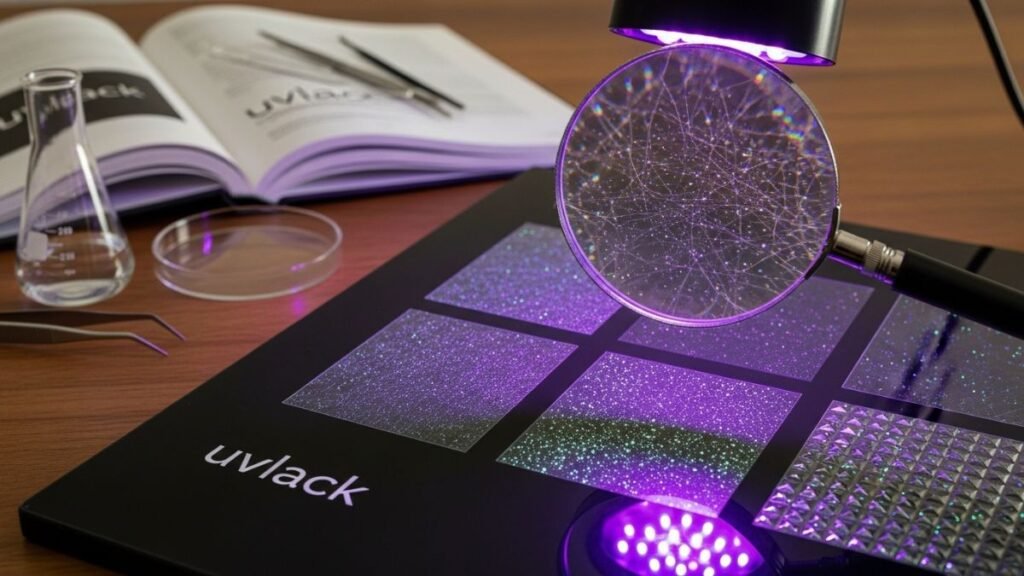
In today’s demanding industries, professionals seek coatings that protect surfaces while boosting efficiency. Uvlack stands out as a game-changer. This advanced UV curable solution hardens quickly under ultraviolet light, creating tough layers on wood, metal, and plastics. It fights wear, fading, and damage, making it ideal for busy production lines. Experts praise uvlack for its blend of strength and simplicity, helping businesses save time and reduce costs. Whether you work in printing or manufacturing, understanding uvlack opens doors to better results.
What Makes Uvlack Essential in Modern Applications
Professionals across sectors turn to uvlack because it solves common coating problems. Traditional varnishes take hours to dry and release harmful fumes. In contrast, uvlack cures in seconds, cutting wait times and emissions. This rapid process stems from photoinitiators that react to UV light, forming a strong polymer network. Users report fewer defects and longer-lasting finishes, which means less rework and happier clients.
Consider a furniture maker facing tight deadlines. By switching to uvlack, they coat pieces faster, achieving a glossy look that resists scratches. This not only speeds up output but also enhances product appeal on store shelves. Statistics show that industries using UV curable options like uvlack see up to 30% faster production cycles, based on real-world case studies from coating experts.
The Background and Evolution of Uvlack
Uvlack builds on decades of coating innovation. UV technology first emerged in the 1960s for printing inks, but it gained traction in the 1980s with better photoinitiators. By the 1990s, manufacturers adapted it for broader uses, like wood finishes and packaging. Today, uvlack represents the latest in this lineage, focusing on sustainability and performance.
Developers refined uvlack to include low-VOC formulas, addressing environmental concerns. Regulations pushed for greener options, and uvlack delivers by minimizing air pollution. Its history ties to key advancements, such as LED UV lamps that use less energy. This evolution reassures users that uvlack is reliable, backed by years of testing and improvements.
For those new to the field, think of uvlack as an upgrade from solvent-based lacquers. It avoids the long drying periods that slow down operations. Instead, it offers instant hardening, which has transformed how factories operate. References from industry reports highlight how uvlack-like coatings have reduced waste by 20-40% in printing facilities.
Key Uses of Uvlack Across Industries
Uvlack shines in diverse applications, proving its versatility. Here, we break down its main roles:
- Printing and Graphics: Apply uvlack as an overprint varnish to protect inks from smudges. It adds gloss to brochures and catalogs, making colors pop. Printers use it for spot UV effects, highlighting logos or images for a premium feel.
- Packaging Solutions: In high-volume production, uvlack creates water-resistant barriers. It guards against moisture and contaminants, ensuring products stay fresh. This speeds up assembly lines and boosts shelf appeal for brands.
- Industrial and Manufacturing: Coat machinery parts with uvlack for corrosion resistance. It’s perfect for automotive components, like interiors that withstand UV damage. In aerospace, it protects composites from harsh conditions.
- Consumer Electronics: Use uvlack on smartphone screens and appliance panels for scratch protection. It insulates against dust and humidity, extending device life.
- Woodworking and Furniture: Finish cabinetry and flooring with uvlack for durable layers. Multiple coats in one day mean faster turnaround, ideal for custom projects.
These uses show how uvlack adapts to needs. For example, a packaging firm might apply it via rollers for even coverage, while electronics makers spray it for precision. Tips for best results include cleaning surfaces first to ensure adhesion.
Benefits That Set Uvlack Apart
Switching to uvlack brings clear advantages. Let’s list them step by step:
- Durability Boost: The cross-linked structure resists abrasion and chemicals. UV blockers prevent fading, extending item lifespan and cutting maintenance.
- Speed Advantage: Cures in seconds, accelerating workflows. No more waiting for drying—move straight to the next step.
- Aesthetic Enhancement: Offers finishes from high-gloss to matte. It deepens colors and hides flaws, creating a professional look.
- Environmental Edge: Low-VOC design reduces pollution. Energy-efficient curing lowers your carbon footprint, supporting green goals.
- Cost Savings: Fewer defects mean less waste. Long-term, it pays off through reduced reapplications and compliance with eco-standards.
Users often note reassurance from these perks. A case from the automotive sector shows uvlack extending warranties by protecting against wear. This reliability helps businesses thrive in competitive markets.
Technical Details Behind Uvlack
Dive deeper into how uvlack works. Its composition includes oligomers, monomers, and photoinitiators. These elements ensure even spreading and strong bonds. The curing process involves UV exposure, triggering polymerization without heat, which protects sensitive materials.
Application steps are straightforward:
- Prepare the surface by removing dirt.
- Apply via spray, roller, or brush.
- Expose to UV light for instant hardening.
- Inspect for uniformity.
Compared to traditional coatings, uvlack avoids solvent evaporation, leading to fewer emissions. Challenges include ensuring full UV coverage on complex shapes—use rotational tools for that. Safety tips: Wear protective gear to shield from UV rays.
Future trends point to LED systems for better efficiency. These use less power and last longer, making uvlack even more appealing.
Achieving Success with Uvlack: Real-World Examples
Real stories highlight uvlack‘s impact. A furniture company adopted it and cut production time by 30%. Their pieces gained a stylish finish, reducing returns. In printing, a catalog producer used uvlack for glossy covers, boosting sales through eye-catching designs.
Another example: An electronics firm coated devices with uvlack, improving resistance to daily wear. This led to higher customer satisfaction scores. Statistics from industry analyses show adoption rates climbing, with 25% of manufacturers switching to UV options like uvlack in recent years.
For tips, start small: Test uvlack on samples to fine-tune your process. Pair it with quality UV lamps for consistent results.
Overcoming Challenges with Uvlack
While uvlack excels, some hurdles exist. Uncured material can gel prematurely if exposed to light—store it properly. On shadowed areas, use primers or hybrid formulas. Initial setup costs for UV equipment might seem high, but savings accumulate quickly.
Reassuringly, most users find the transition smooth. Training teams on safe handling ensures success. References from coating associations emphasize proper protocols to maximize benefits.
Sustainability and Uvlack’s Green Promise
Uvlack aligns with eco-friendly practices. Its low emissions support cleaner air in workplaces. By enabling recyclable substrates, it promotes circular economies. Businesses using uvlack often meet green certifications, appealing to conscious consumers.
Examples include packaging firms reducing VOCs by 80% with uvlack. This shift not only complies with laws but also enhances brand image.
Integrating Uvlack into Your Workflow
Ready to try uvlack? Follow these steps:
- Assess your needs—identify surfaces and desired finishes.
- Choose the right formula—glossy for visuals, matte for subtlety.
- Invest in UV tools—lamps and conveyors for efficiency.
- Train staff—focus on application and safety.
- Monitor results—track speed and quality improvements.
This approach ensures seamless adoption. Link to resources like understable.org for more on sustainable materials.
Uvlack in Specialized Sectors
Explore niche uses. In aerospace, uvlack coats optical fibers for UV protection. Automotive pros apply it to headlights for clarity and durability. Beauty adapts it for gel nails, offering long-lasting manicures.
Each sector benefits uniquely. For instance, medical devices gain chemical resistance from uvlack, ensuring hygiene.
Comparing Uvlack to Alternatives
How does uvlack stack up? Traditional varnishes dry slowly and emit fumes. Water-based options lack hardness. Uvlack combines speed, strength, and low impact.
Data shows uvlack reduces defects by 15-25% over solvents. This comparison reassures choices for long-term gains.
Tips for Optimal Uvlack Application
Maximize results with these pointers:
- Use clean tools to avoid bubbles.
- Control thickness for even curing.
- Test light intensity regularly.
- Store in dark, cool places.
- Recycle waste responsibly.
These habits build confidence in your process.
The Future of Uvlack Innovations
Looking ahead, uvlack evolves with bio-based ingredients for greener formulas. Machine learning might optimize curing times. LED advancements promise portability for on-site use.
Experts predict wider adoption, driven by sustainability demands.
FAQs About Uvlack
What is uvlack? Uvlack is a UV curable coating that hardens quickly for durable protection.
How does uvlack cure? It reacts to UV light, forming a tough film in seconds.
Is uvlack eco-friendly? Yes, with low VOCs and energy-efficient processes.
Where can I use uvlack? In printing, packaging, furniture, and electronics.
What are uvlack’s main benefits? Durability, speed, aesthetics, and cost savings.
Conclusion
Uvlack transforms surface protection with its rapid curing, strength, and green features. From printing to manufacturing, it delivers reliable results that boost efficiency and quality. By integrating uvlack, professionals achieve lasting success in competitive fields. What challenges do you face with coatings, and how might uvlack help?
References
- Laser Magazine on Uvlack – Detailed insights on UV curable coatings for printing and industrial uses.
- Hybridoo Guide to Uvlack – Explains technical aspects and applications in electronics and automotive.
- Jean Clair on Digital Uvlack – Though focused on marketing, offers broader innovation context.



Leave a Reply